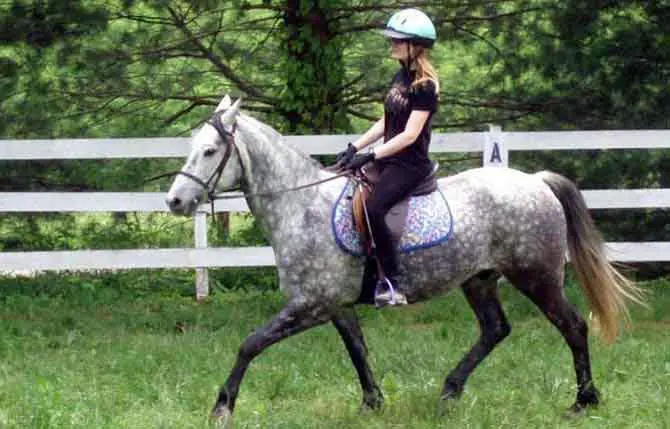
Speaking Horse
While many First Farm Inn riders are beginners, some have their own horses or get horses after riding with us. There is much to learn about communicating safely and comfortably in a language as foreign as equine.
Remember horses are prey animals, always expecting to be attacked, already ready to run away from danger. Very few horses make it to adulthood without having been attacked or viciously blamed for something. They have the second-longest memory in the mammal kingdom — that angry farrier who hit them with a rasp, the kid who grabbed a whip and beat them because he didn’t win a ribbon, someone who got a foot stepped on — they remember it all — and expect other humans to hurt them too.
Horse behavior gets in-put from many variables — weather, barometric pressure, a new horse joining the herd, being confined too much…
“Marish” Behaviors
Mares are notoriously super sensitive with attitudes that change with their moods — although geldings can too. Female horses have 28-day estrus cycles and often will act differently at different stages. They may happily hang out with geldings most days, then suddenly bite their favorite or flirt with him and drive other horses away.
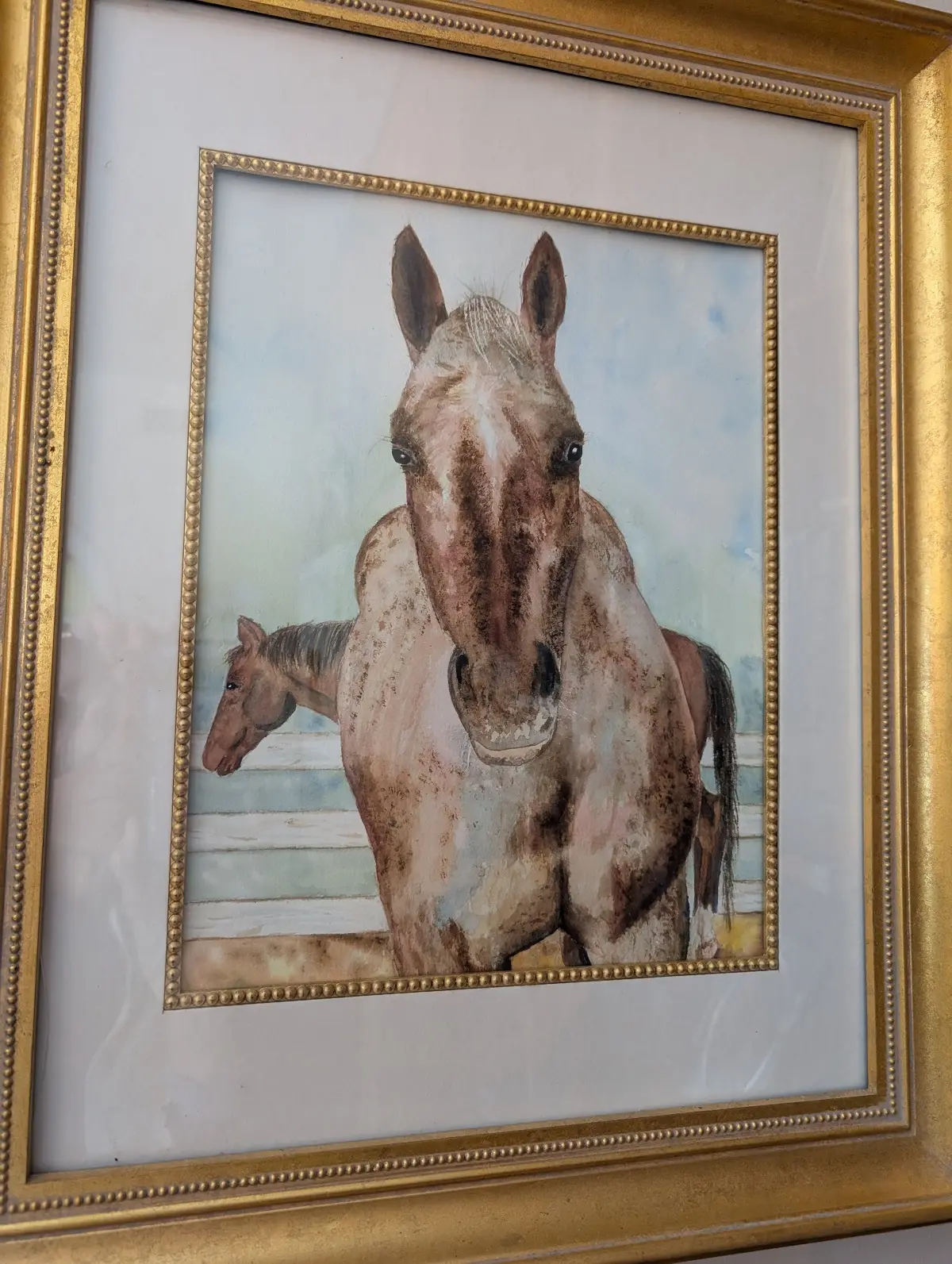
In 2000, we had a beautiful Appaloosa named Ginger who was the queen of “marish” behavior! Our herd leader, an off-the-track Thoroughbred who came to us in his teens, was madly in love with her, always keeping his body between Ginger and anything that could have possibly threatened her. In her teens, her arthritis exacerbated and when Seven’s Tiger went blind and deaf at 30, I put them down standing side by side.
In defense of mares, there’s a saying, “A mare will give you 110%, but you’ll never get more than 90% from a gelding.” Some people prefer mares, particularly for high level showing. Any horse that you spend time with will learn about you as you learn about them.
Horses often mirror our moods and attitudes, so get yourself together before you go out to ride.
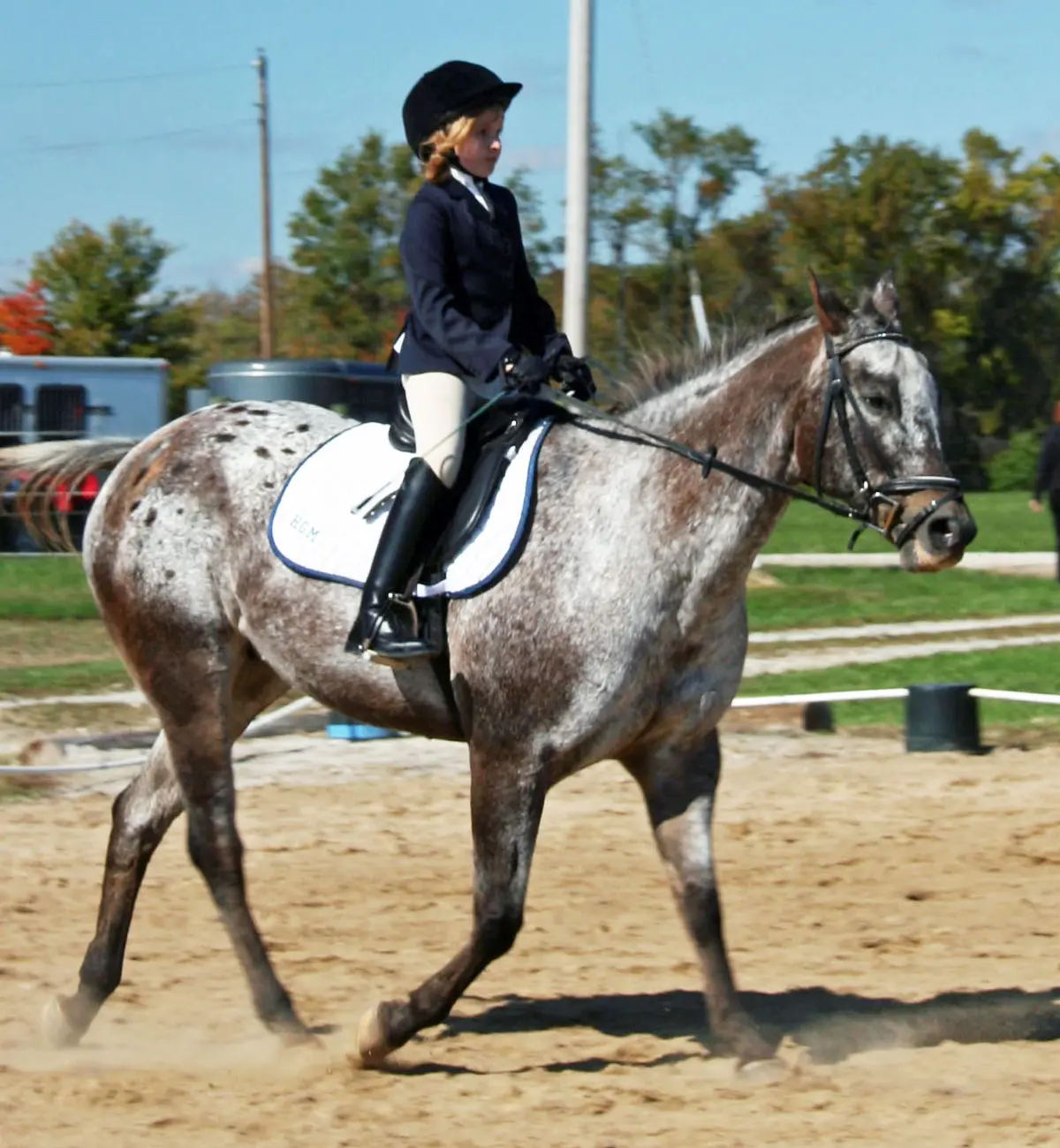 Every time you ride a horse, you are training that horse
Every time you ride a horse, you are training that horse. That’s one of the reasons so many have bad experiences on “trail rides” with places that sell and buy new horses every year, or don’t provide essential care like regular hoof trimmings, worming and vaccinations.
Safe horseback riding skills and techniques
- First, make sure your riding position is good and solid with a straight back. Sit balanced in the saddle, heels down – that’s your position of authority. Breathe deep and sit centered in the middle of your horse’s back. Don’t let her intimidate you, push you forward or make you hold your breath!
- If your horse is upset or nervous, you must become calmer and more in control. That means walking your fingers up your reins until there is a direct connection – a straight line from your elbow to the corner of her mouth – no bow or sag in the reins that gives space to undertake dangerous behaviors. But, riders hands must allow enough rein for the horse to move forward. Don’t hold your reins so tight your horse can’t walk without pressure in her mouth, then punish her for not moving. Remember her head must be able to bob as she moves.
- Watch your horse’s ears and the angle of her head. Your view, when you are riding, should always be through your horse’s ears, so their ear position as well as the angle of their nose is easy to notice. Pinned ears are a warning that she may be preparing to bite. (Heisting a hind leg toward another horse is also disrespectful of the rider. Your horse is saying, “I’m enforcing my herd position.” She should be listening to you and letting you make sure she’s safe with the other horses.)
- React immediately. Rudeness is a punishable offense. (Any horse I ride gets reprimanded for pinning an ear.) Use your voice. Horses understand tone. Mine all know what “No!” means – stop whatever you’re doing NOW!
- Give direction — a small tug on one rein, away from the angle of her head or toward the outside of the arena – away from any horse she’s challenging. When you take with one rein, you must give with the other to allow the horse’s head to turn. Apply more leg pressure, or a bump with your calf if you don’t get an immediate response. Ask for a halt or a turn. Give her a job, something to think about. We often ask horses to walk over logs or around trees to get them to do what they’re asked to do.
- The second an ear pins, a nose raises (as if to bite or charge), tell your horse that you are the human with the big brain! Start with your voice. Then try a tiny “half halt”, a tug with your third finger that says “listen to me.” If you don’t get a reaction — nose dropped, ears where they belong — get stronger, just as you do any time your horse doesn’t listen to you. You may have to repeat this consistently for several minutes, alternating with a leg bump to emphasize you mean business if the ears didn’t come up. Remember you only have three seconds to correct a horse’s misbehavior.
- If she is sidling toward or away from something, visualize your leg as a wall and straighten her body out, pushing with your calf to get her back where you want her.
- Always, the second (literally) your horse “gives” to you, reward by releasing whatever pressure you’ve used. Being consistent and insistent works. Sometimes it may take some time for the horse to stop rebelling, tuck her head, round her back and “give” to you.
- You can also talk, “easy, quiet, cut that out!” Horses recognize tone immediately.
- The ultimate reward is ending your ride on a positive note. If you’re having a very difficult time, simply getting your horse to go calmly forward on the rail at a walk may be enough. If you are in a dangerous situation, as soon as your horse has demonstrated she’s listening to you and is calm enough to dismount, do so. Then lead your horse, ask her to back, turn and do whatever you ask her to do from the ground.
- Dismount safely, remove your tack, groom and rub your horse out. Never release a horse with saddle marks, it’s the mark of a rude and thoughtless rider.
- Consider giving your mare a supplement to help calm her hormones. There are many herbal products on the market. They come in many forms, pellets, powders or liquids that can be added to feed. Give them time to work, at least a month before giving up or trying another variety.
 Ride horses summer, winter, spring and fall!
Practice, practice, practice! Ride horses in all seasons and under all (safe) conditions! Weather, wind, ground conditions and herd interactions play a role in riding. When you trail ride at First Farm Inn, you learn a lot about horses think and react. You know our horses are happy, healthy and well-cared for. Call 859-586-0199 between 8 a.m. and 8 p.m. to schedule a ride.
Horseback riding is a lifelong learning experience
Horseback riding is a lifelong learning experience. The more horses you ride, the more quality, experienced teachers you have, the more you learn!
Some basic horseback riding tips:
- Increase your awareness of everything going on around you to become a good horse person.
- Notice the small things so you can stop the inappropriate behavior before it starts, then forget it and go on. Remember to breathe deeply and regularly. Don’t hold on to any anxiety!
- Be the leader! The stronger the horse gets, the more they try to push you around, the less you let them.
- The more upset or nervous the horse gets, the calmer and more in control you get!
Riding takes practice, alertness, awareness and kindness. Keep at it!